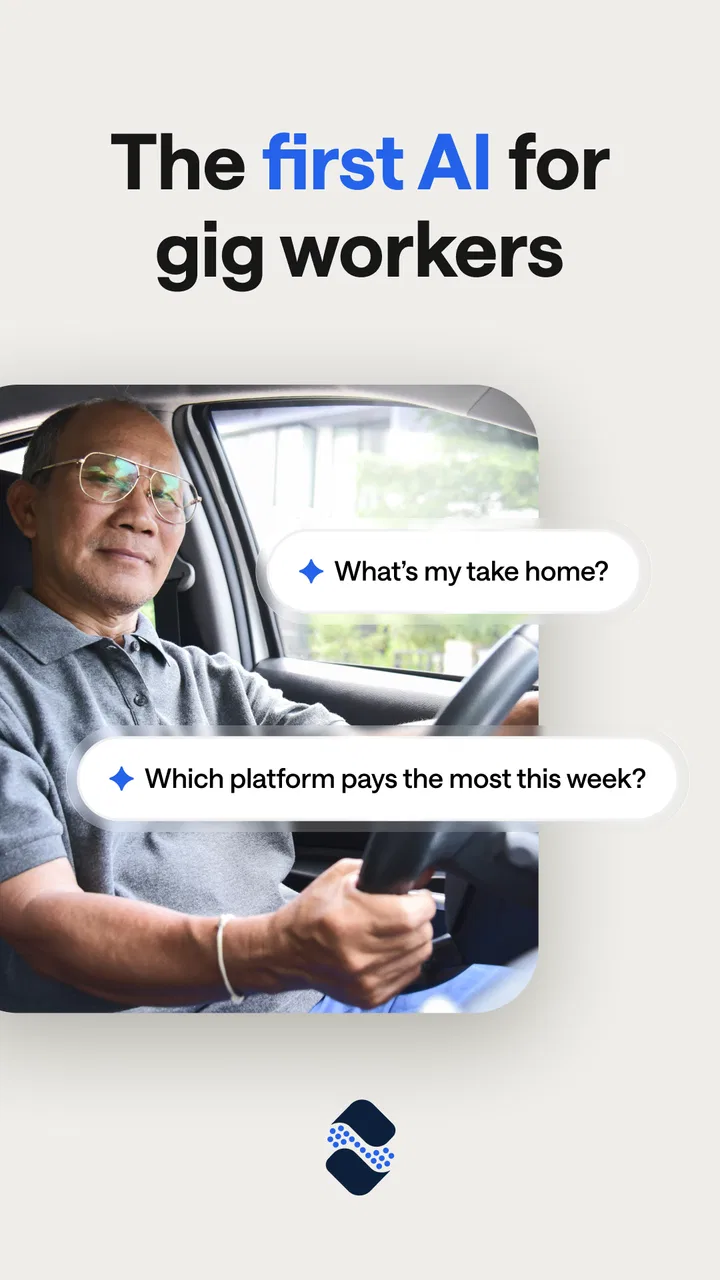
Solo: Your Gig Business App
- 4.2
- Rating
- 500.00K
- Installs
- Free
- Price

 Analysis by App-foxy
Solo: Your Gig Business App is the kind of business app I would try when freelance work starts spreading across too many places. Before using it, I often found myself switching between gig platforms, notes, calendar entries, messages, and a basic spreadsheet just to remember what needed attention. Solo, developed by WorkSolo, is designed to bring gig work into one place, and that focus makes it more interesting than a generic task manager.
I approached it as a working tool rather than a quick download. The important question is not whether it can replace every service a freelancer uses, but whether it can reduce the mental effort between accepting work and completing it. In my experience, that is where an app like this earns its place. It is free to install, aimed at an Everyone audience, and available for devices running Android 8.0 or later. Optional in-app purchases range from $0.99 to $200.00 per item, so I would still check the purchase screen carefully before committing to anything beyond the basic experience.
Building a calmer gig-work workflow
I use a calmer gig-work workflow as a way to make the next decision easier, not as a reason to track every detail. In this section, I focus on the small habits that keep scattered commitments understandable, then turn to how those habits hold up in an ordinary workday.
You May Also Like

 Blood Strike: 2.5 Anniversary
Blood Strike’s Loadouts Turn Every Drop Into a Tactical Gamble
A close look at Blood Strike’s custom loadouts: how fast access to signature weapons reshapes its battle royale rhythm, rewards preparation, and narrows the gap between fights.

 Pandora - Music & Podcasts
Pandora’s Music Is Easy to Start, but Harder to Recover
Pandora’s strength is its low-effort path from a seed to a station. Its weak spot is how much confidence it asks you to place in connection, setup, and quiet recovery.

 8 Ball Pool
 Is Built on Rivalries, Rematches, and Routine
A close look at the rivalries, rematches, shared routines, and unanswered safety questions that turn a quick pool match into a persistent mobile community.

 Samsung Music
’s Quiet Strength Is Playing What You Already Own
Its reach comes less from spectacle than from dependable access to a personal library. That simplicity is both the app’s strongest retention engine and its ceiling.

 AccuWeather: Weather Radar
AccuWeather Review: A Quick, Clear Forecast for Everyday Decisions
For everyday plans, the best forecast is the one you can understand quickly. AccuWeather makes rain timing, radar, and local conditions easy to act on, with a few trade-offs.

 Hill Climb Racing
Why Hill Climb Racing Still Turns Crashes Into One More Run
A tiny car, a bumpy hill and one more upgrade: Hill Climb Racing keeps resurfacing because its simple chaos makes every near-miss feel personal.
More From Our News Desk



What happens before Solo enters the routine
Gig work rarely begins with a neat project brief. A request may arrive through a marketplace, a text message, email, or a conversation that later turns into a job. The first practical challenge is capturing the work before it disappears under newer messages. The second is separating confirmed work from possible work. The third is remembering the small follow-ups that do not feel urgent but can affect payment, timing, or client trust.
That is the space where Solo makes sense. I would not treat it as a magic replacement for the platforms where jobs originate. Instead, I see it as a central workspace for the business around those jobs. The distinction matters. If you expect the app to discover every opportunity, communicate with every client, and handle every financial task automatically, it may feel limited. If your main problem is scattered gig information, its focused approach is more useful.
My preferred starting point would be a short reset rather than importing every old note at once. I would collect only active jobs, upcoming obligations, and unpaid or unfinished items. This keeps the first setup manageable and gives the app a clear purpose from the beginning. A cluttered workspace can recreate the same stress as a cluttered phone, even when the tool itself is well designed.
Capturing work without creating another inbox
The strongest habit is to record a job as soon as it becomes real, then add only the information needed to act on it. For example, after accepting a delivery, design request, cleaning appointment, or other gig, I would note the client or platform, the agreed work, the expected timing, and the next action. The next action is especially important. “Finish project” is vague; “send the first draft” tells me what to do when I open the app again.
I would also keep potential work separate from confirmed work. Mixing the two creates a false sense of workload and makes planning less reliable. A possible request should not occupy the same mental space as a paid commitment. Solo is more valuable when I use it to make that distinction visible, rather than treating every conversation as a job already on the calendar.
One useful workflow is to capture first and organize later. When I am busy, I do not want to stop and create a perfect record. I would enter the essential details, then use a quieter moment to clean up names, timing, and follow-up notes. This two-step approach is more sustainable than waiting for enough time to build a complete entry, because waiting is how small jobs get forgotten.
Another practical tip is to write notes for the version of myself who will return after a long day. A note such as “client wants changes” is not enough. I would record which changes, what has already been sent, and what I am waiting for. This reduces the need to reopen old conversations just to reconstruct the situation.
Turning scattered jobs into a repeatable routine
An app becomes genuinely helpful when it supports a routine instead of demanding constant attention. I would use Solo at three points in the day: a quick capture during work, a short planning check before starting, and a closing review after finishing. These checks do not need to become long administrative sessions. Their purpose is to keep the work visible and prevent unfinished details from living only in memory.
At the beginning of a work period, I would look for the next concrete action rather than scanning everything. If several jobs are active, I would choose the task with the closest consequence: a deadline, a client waiting for a reply, or a step that blocks other work. This is a better use of a gig dashboard than simply sorting tasks by how easy they feel.
At the end, I would mark what is complete and record what is still waiting on someone else. That last part is easy to overlook. A job can feel finished from my side while payment confirmation, approval, access details, or a client response remains outstanding. Keeping those waiting states visible helps separate work I need to do from work that is genuinely out of my hands.
The app also works best when paired with a simple weekly review. I would look back at completed gigs, open commitments, and recurring friction. If the same kind of follow-up appears repeatedly, I would create a personal checklist outside the immediate job details or use a repeatable note pattern inside my workflow. The insight is not merely to track more; it is to notice where my process keeps leaking time.
For someone working several small gigs, this routine can be more useful than a large project-management system. Bigger tools often offer many views, automations, and collaboration features, but they can require more maintenance than a solo worker wants to provide. Solo’s appeal is its narrower purpose: keeping gig work together without making the business feel like a corporate project office.
A realistic day with the app
Imagine I accept two jobs in the morning and receive a third inquiry while traveling. Without a central place, I might leave one request in a message thread, put another in my calendar, and trust myself to remember the third. By afternoon, I would need to search several apps to decide what is actually due.
With Solo as the organizing layer, I would capture the inquiry as potential work, record the two accepted jobs as active commitments, and write the next action for each one. Before starting, I would check which job has the nearest deadline and whether either requires information from a client. During the day, I would update the records as work moves forward instead of relying on memory.
At the end of the day, I would leave a short note for tomorrow: what is ready to deliver, what needs revision, and which client needs a reply. That small closing habit is more valuable than a dramatic productivity overhaul. It means the next work session begins with decisions already made, rather than with another round of searching and guessing.
Where the workflow can break down
The main failure point is duplication. If I record a job in Solo but never return to update it, the app becomes another static list. The same problem appears if I copy information from a platform without deciding which system is the source of truth. I would use Solo for the operational picture of my gig business, while keeping original conversations, platform records, and official payment information where they belong.
Another weakness is over-documentation. It is tempting to add every message, idea, and minor detail, especially when trying to feel organized. That creates noise. I would keep the record centered on commitments, next actions, timing, and blockers. If a detail does not help me decide what to do next, it probably belongs elsewhere.
There is also a trade-off between simplicity and depth. A specialized gig-work app can feel more relevant than a blank notes app, but a general project manager may be better for complex client projects with multiple collaborators, detailed dependencies, or extensive file handling. Solo is most convincing when the work is personal, varied, and spread across gig opportunities rather than managed by a large team.
Because the app is free while offering optional purchases, I would approach upgrades as a workflow decision rather than an automatic improvement. I would first establish a reliable habit with the basic experience. If a paid option saves meaningful time every week, it may be worthwhile; if it merely adds information I will not maintain, it is not. The upper end of the listed purchase range makes this especially important for workers watching irregular income.
How it compares with familiar alternatives
A notes app is faster for unstructured capture, but it usually leaves me responsible for building the business system myself. A calendar is excellent for appointments and fixed times, yet it does not naturally explain the status of a job or the next action. A spreadsheet can provide control, but it often takes effort to maintain and is less comfortable for quick updates from a phone.
General task apps sit somewhere in the middle. They can be flexible, but I may need to create my own categories for leads, active gigs, waiting items, and completed work. Solo’s advantage is that its identity is tied to gig work, so the starting point feels more relevant. The trade-off is that a general tool may adapt better if my work grows into a larger operation or needs collaboration beyond my own workflow.
I would choose Solo over a plain notes app when I regularly lose track of job status. I would choose a calendar alongside it when timing is critical. I would choose a spreadsheet or broader business platform when I need detailed financial analysis, inventory, team permissions, or a long history of structured records. These tools do not have to compete; Solo can serve as the day-to-day control panel while the others handle their stronger specialties.
Who should adopt it, and who should skip it
Solo is a good fit for independent workers who handle multiple gigs, especially when each job is small enough to be easy to overlook. It should also suit people who move between platforms and need one place to see what is active, what is pending, and what deserves attention next. The app’s business category is appropriate because the real benefit is not just task completion; it is creating a repeatable operating habit around irregular work.
I would recommend it to a freelancer who says, “I know what I need to do, but I keep forgetting where I wrote it down.” I would also suggest it to someone turning occasional gig work into a more deliberate side business. The app can help make that transition visible by encouraging consistent capture and review rather than relying on scattered reminders.
I would skip it if my work consists of one simple recurring activity that is already handled well by a calendar or the platform itself. I would also look elsewhere if I need a full accounting system, advanced team collaboration, elaborate project dependencies, or a specialized customer relationship database. Adding a dedicated app is not automatically productive; it is worthwhile only when it removes a real source of friction.
Practical details before installing
The app is free, carries an Everyone content rating, and has reached over 500 thousand installs. Its average rating is 4.3 from around 7 thousand ratings, with roughly 1 thousand written reviews. Those figures suggest that it has found a meaningful audience, although popularity alone does not guarantee that its workflow will match my own.
The current version is 5.3.1, and Android users need version 8.0 or newer. I would check the device requirement before installing on an older phone. I would also review any optional purchase carefully, particularly if I am testing the app during a period when gig income is unpredictable.
WorkSolo’s app is best understood as a focused organizer rather than a complete replacement for every service a self-employed worker uses. That expectation makes the experience easier to judge. The question is whether it gives me a dependable place to turn scattered gig commitments into a manageable daily sequence.
My final assessment
After looking at Solo through the lens of a sustainable work system, I see its main value in the space between opportunity and completion. It can help me capture work before it gets lost, distinguish confirmed jobs from possibilities, and finish each day with a clearer starting point for the next one. Those are modest improvements, but they are exactly the kind that can compound when gig work is irregular.
Its limitations are equally clear. It will not remove the need to communicate through the original platforms, maintain accurate records, or choose sensible priorities. It can also become another neglected list if I do not build a short review habit around it. For complex teams or detailed business administration, a broader tool may be the better investment.
Still, for a solo worker who wants a single operational view of gig commitments without constructing a system from scratch, I find Solo: Your Gig Business App worth trying. I would begin with active work only, keep notes action-focused, review the workspace at the end of each workday, and delay optional spending until the basic routine proves useful. Used that way, it feels less like another productivity distraction and more like a practical home base for independent work.
FAQs for Solo: Your Gig Business App
01What is Solo: Your Gig Business App?
Solo: Your Gig Business App is designed for freelancers and gig workers to manage their business activities more efficiently. It offers tools for tracking income, managing expenses, and setting financial goals, allowing users to streamline their operations and focus more on their core work.
02Which devices are compatible with Solo?
Solo is available for both Android and iOS devices. It supports a wide range of smartphones and tablets, ensuring that users can access their data anytime and anywhere. Make sure your device is updated to the latest OS version for optimal performance.
03How secure is my data on Solo?
The app prioritizes user data security by implementing robust encryption and security protocols. Solo ensures that all personal and financial information is safeguarded against unauthorized access. Regular updates further enhance security measures to protect user data.
04Can Solo help me with tax preparation?
Yes, Solo provides features that assist with tax preparation by generating detailed reports of your income and expenses. This functionality helps users organize their financial data, making it easier to file taxes accurately and efficiently, potentially saving time and effort.
05Is there a subscription fee for using Solo?
Solo offers both free and premium subscription plans. The free version includes basic features, while the premium plan unlocks advanced tools and functionalities. Users can choose the plan that best fits their needs and budget, ensuring flexibility and accessibility.
Pros
- Intuitive user interface for easy navigation.
- Comprehensive expense tracking features.
- Efficient invoicing system integrated.
- Customizable templates for branding.
- Secure data storage with cloud backup.
Cons
- Limited customer support options available.
- Some features require a premium subscription.
- Occasional syncing issues with devices.
- No offline mode for remote areas.
- Limited integration with third-party apps.

Solo: Your Gig Business App
Gallery